The 4.5GB Smartphone Data Secret Millions Miss Each Month
Discover how federal Lifeline phone guidelines set data thresholds, who qualifies for monthly subsidies, and how to keep service active.
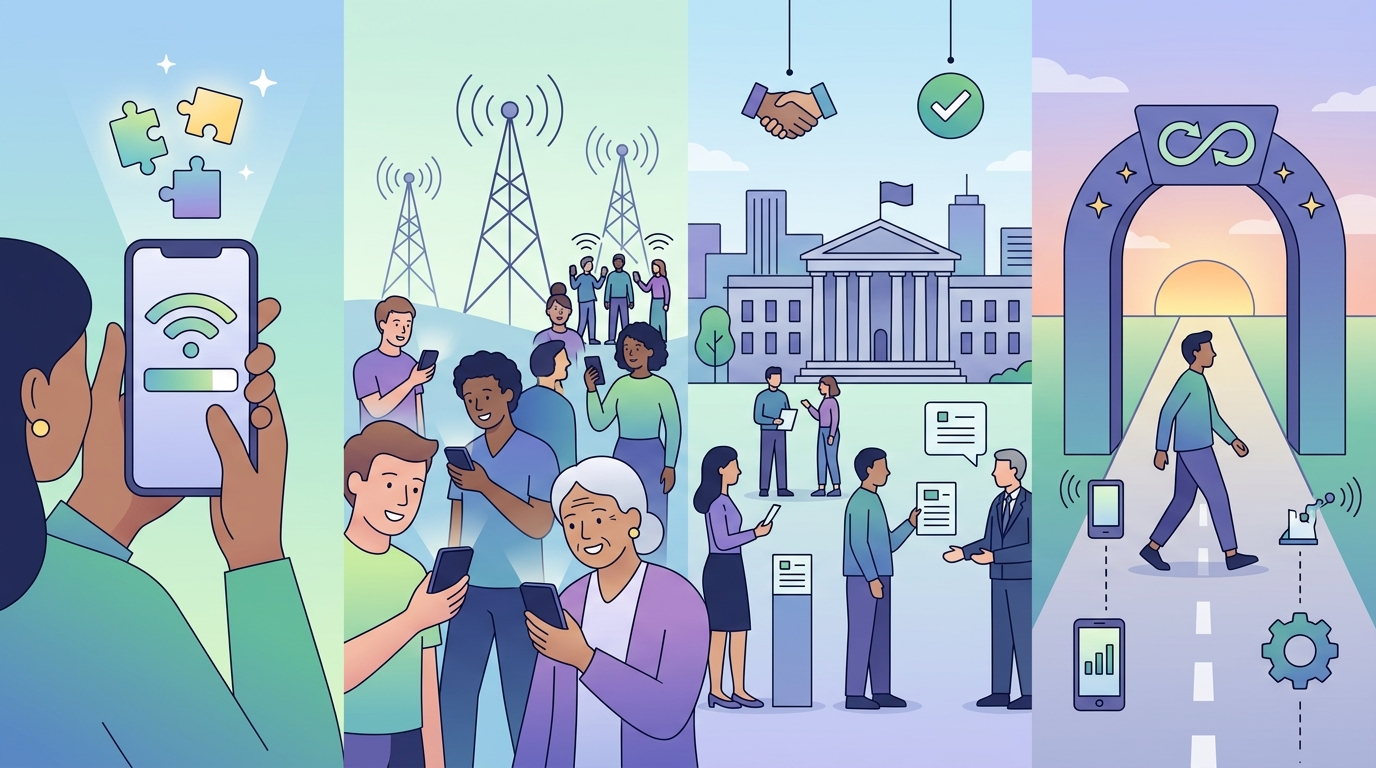
Securing government-subsidized mobile phone service can save households hundreds of dollars each year, but navigating data caps and program requirements often creates confusion. By understanding the underlying rules established by federal administrators, eligible consumers can maximize their monthly benefits without facing unexpected service disconnections (Source 1, Source 2).
The Minimum Service Standard That Controls Your Monthly Data
Federal connectivity assistance operates under strict guidelines set by the Universal Service Administrative Company (USAC) on behalf of the Federal Communications Commission (Source 1). Under current Lifeline program rules, mobile service providers participating in the program must deliver a baseline standard of high-speed data, which is set at 4.5 GB per month for standard mobile broadband plans (Source 1). While individual commercial phone carriers may advertise variations in their promotional materials, this 4.5 GB threshold serves as the official national benchmark that every participating mobile carrier must meet for qualified subscribers (Source 1).
Understanding this minimum standard is critical because it dictates how much high-speed internet allocation you receive each billing cycle. Carriers are permitted to offer more data than the federal baseline, but they cannot legally provide less to a subscriber enrolled in the standard Lifeline mobile broadband program (Source 1). In addition to mobile data standards, federal rules mandate baseline allocations for mobile voice minutes, ensuring subscribers maintain access to essential communications (Source 1). Knowing these exact baseline figures helps subscribers monitor their monthly usage effectively before reaching performance limits.
Income Thresholds and Automatic Program Qualification
Eligibility for federal smartphone data subsidies is determined through two primary pathways: household income level or existing participation in recognized federal assistance programs (Source 1, Source 2). Under the income-based pathway, a household qualifies if its total gross annual income is at or below 135% of the Federal Poverty Guidelines (Source 1, Source 2). These income thresholds adjust annually based on household size and geographic location, with distinct calculations for residents living in Alaska and Hawaii (Source 1).
Alternatively, subscribers gain eligibility by participating in specific federal benefit programs (Source 1, Source 2). Qualifying programs include the Supplemental Nutrition Assistance Program (SNAP), Medicaid, Supplemental Security Income (SSI), Federal Public Housing Assistance (FPHA), and the Veterans Pension and Survivors Benefit (Source 1, Source 2). For consumers residing on qualifying Tribal lands, additional programs such as Bureau of Indian Affairs General Assistance, Tribal TANF, and Food Distribution Program on Indian Reservations also confer eligibility (Source 1). Verification is handled electronically in many states through state database checks, though manual documentation like benefit award letters may be required if automated matching is unavailable (Source 1).
The One-Per-Household Rule and Mandatory Usage Windows
A frequently overlooked aspect of federal phone assistance is the strict single-benefit limit imposed on households (Source 1). Federal rules define a household as an 'economic unit' consisting of individuals who live together at the same address and share income and living expenses (Source 1). Under this definition, only one Lifeline benefit—covering either mobile service or fixed home internet—is permitted per economic unit (Source 1). Adult family members living together who maintain completely separate finances may qualify as independent economic units, but they must complete a formal Household Worksheet during enrollment to verify their financial independence (Source 1).
Additionally, subscribers receiving service that is fully covered by the federal subsidy without any out-of-pocket cost must comply with active usage requirements (Source 1). To maintain active service, the account must register activity at least once every 30 days (Source 1). Qualifying activity includes placing an outbound voice call, sending a text message, using mobile data, buying additional data, or answering an incoming call from a person outside the household (Source 1). If a subscriber fails to complete a qualifying activity within 30 days, the service provider issues a 15-day notice period, after which the service is subject to deactivation if left unused (Source 1).
Baseline Discounts and Enhanced Tribal Support Figures
The financial structure of government phone support relies on fixed monthly subsidies paid directly to participating telecommunications providers (Source 1, Source 2). For eligible households in standard service areas, the base Lifeline subsidy provides a discount of up to $9.25 per month applied to phone or broadband bills (Source 1, Source 2). However, to address connectivity challenges in underserved areas, enhanced support rates apply to residents living on federally recognized Tribal lands (Source 1). Qualified Tribal residents receive an enhanced monthly discount of up to $34.25, which allows participating service providers to bundle larger data allocations or complete service packages without monthly charges to the consumer (Source 1, Source 2).
To help consumers compare these federal benefit structures, the table below outlines the core subsidy categories, data baselines, and primary qualification requirements defined by program guidelines (Source 1).
| Benefit Category | Maximum Monthly Subsidy | Federal Minimum Data Baseline | Primary Qualification Requirement |
|---|---|---|---|
| Standard Lifeline Mobile | Up to $9.25 | 4.5 GB per month | Income <= 135% FPL or SNAP / Medicaid (Source 1) |
| Tribal Lands Mobile | Up to $34.25 | 4.5 GB per month | Resident on qualifying Tribal land (Source 1) |
| Standard Fixed Broadband | Up to $9.25 | Defined wireline speed baseline | Income <= 135% FPL or Assistance Program (Source 1) |
| Tribal Fixed Broadband | Up to $34.25 | Defined wireline speed baseline | Resident on qualifying Tribal land (Source 1) |
Why Speed Throttling and Data Caps Impact Daily Usage
While the standard federal baseline guarantees 4.5 GB of mobile broadband data per month, subscribers often wonder what occurs once that allocation is reached (Source 1). Service providers fulfill their legal requirement by providing the initial 4.5 GB allocation at standard high speeds. Once a subscriber exceeds this monthly cap, the service provider is not required to provide additional high-speed data for free unless specified in their individual service contract (Source 1).
In practice, carriers typically handle data usage beyond 4.5 GB in one of two ways: either by reducing network speeds down to reduced bandwidth levels (throttling) or by requiring the user to purchase add-on data packages. Throttled speeds remain functional for basic text messaging and light web browsing, but they significantly slow video streaming, application downloads, and audio calls over internet protocols. Managing background application updates, disabling auto-playing online videos, and connecting to secure local Wi-Fi networks when available are practical methods for preserving baseline high-speed data throughout the monthly billing cycle.
How Recertification and Annual Audits Maintain Active Service
Enrollment in federal connectivity programs requires ongoing compliance through an annual recertification process (Source 1). Every year, USAC audits enrolled subscribers to confirm that they continue to meet income guidelines or program participation requirements (Source 1). The National Verifier system automatically attempts to validate ongoing eligibility by cross-referencing state and federal assistance databases (Source 1).
If the automated system verifies ongoing eligibility, the subscriber receives notification that recertification is complete without needing to take further action (Source 1). However, if automated verification cannot confirm status—such as when eligibility was established through income tax returns or state-specific programs not linked to the central database—the subscriber is issued a recertification request (Source 1). Subscribers have a 60-day window from the date of notification to submit documentation proving current eligibility (Source 1). Missing this 60-day deadline results in de-enrollment, requiring the individual to reapply to restore their monthly discount (Source 1).
Step-by-Step Instructions to Apply Through National Verifier
Navigating the application process for federal phone data assistance requires following established administrative steps to ensure prompt processing (Source 1, Source 2). The application workflow relies on centralized systems designed to verify identity and eligibility accurately.
- Review your household financial details or government assistance enrollment to confirm eligibility under the 135% Federal Poverty Guidelines or approved programs like SNAP or Medicaid (Source 1, Source 2).
- Assemble official supporting documentation, such as recent pay stubs, state benefit approval letters, or tax returns (Source 1).
- Visit the official National Verifier portal at CheckLifeline.org or navigate through USA.gov to initiate an online application (Source 1, Source 2).
- Upon receiving approval from the National Verifier, select a participating mobile carrier operating in your geographic area and present your approval details to activate your monthly subsidy (Source 1).
How much data is provided under the baseline federal Lifeline program?
Current federal rules establish a minimum service standard of 4.5 GB of mobile data per month for participating mobile broadband plans (Source 1).
Can multiple people in the same household receive separate Lifeline phone discounts?
No. Federal regulations limit the Lifeline benefit to one per household (economic unit) (Source 1). However, adults living at the same address who maintain separate income and expenses can qualify separately by completing a Household Worksheet (Source 1).
What happens if I do not use my free Lifeline phone service for 30 days?
If your service is fully covered by the subsidy without out-of-pocket costs, you must use it at least once every 30 days to keep it active (Source 1). Non-usage triggers a 15-day notice period before account termination (Source 1).
Sources
- Lifeline Support Official Site — Universal Service Administrative Company
- Government Help with Phone and Internet Bills — USA.gov
This article is for general information only and is not professional advice. Figures come from public sources and change over time; check the official source before you act.
More from Daily Facts Wire
- 5 Lifeline Phone Application Mistakes That Stop Your Monthly Benefits
- 7 Income Rules That Qualify You for a Free Smartphone Today
- The 4.5GB Smartphone Data Secret Millions Miss Each Month
- Get Your Free Smartphone Through Federal Lifeline and Meta Promo Rules
- 4 Costly Mistakes People Make Claiming Free Phones On Facebook
- The $35 Hidden Activation Fee Inside Free Meta Phone Offers