7 Income Rules That Qualify You for a Free Smartphone Today
Federal rules allow eligible low-income households to receive a discounted or free mobile device and monthly service through the Lifeline program.
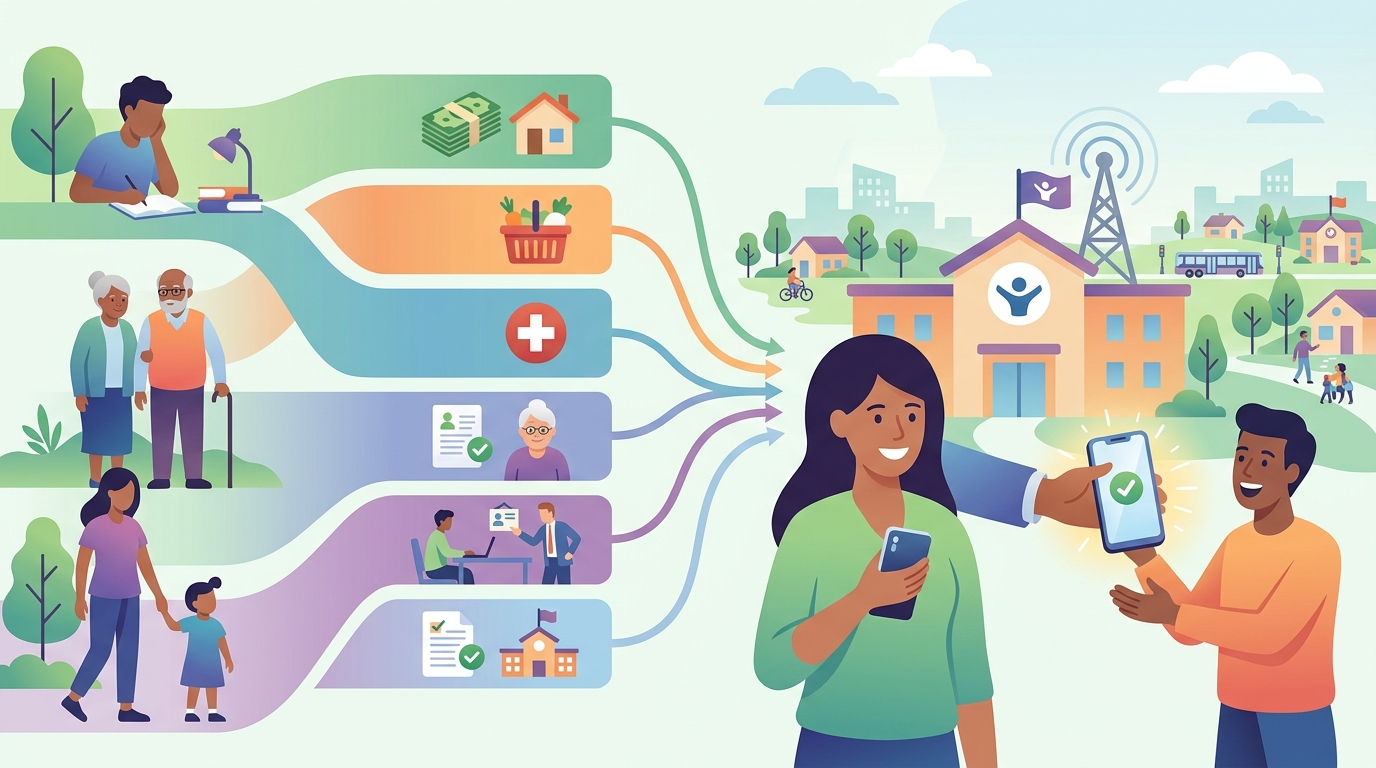
Millions of American consumers qualify for mobile service and connected devices at no cost through federal assistance frameworks. Under official guidelines established by the Universal Service Administrative Company, specific income thresholds and program participation rules determine who receives these benefits (Source 1).
Rule 1: The 135 Percent Federal Poverty Guideline Standard
The primary mechanism for qualifying for a Lifeline-supported smartphone is gross household income. To meet the baseline income standard, your total household income must be at or below 135 percent of the Federal Poverty Guidelines (Source 1). This threshold is adjusted annually based on inflation and household size.
When calculating gross income, federal rules require you to count all money earned or received before taxes by every person living in your household (Source 1). This includes wages, salary, social security payments, disability benefits, alimony, child support, and retirement payouts. For a single individual residing in the contiguous United States, 135 percent of the poverty guideline creates a specific dollar cap that determines eligibility before any deductions are applied (Source 1).
If your household income falls exactly at or below this percentage, you meet the financial standard required by the National Verifier (Source 1). Next, you must understand how household composition affects this dollar figure.
Rule 2: Categorical Qualification Through Federal Assistance Programs
If your total earnings exceed the 135 percent threshold, you can still qualify through participation in approved government assistance programs (Source 1). This secondary route is known as categorical eligibility and relies on existing qualification records from state and federal agencies.
Under federal rules, active participation in any of the following assistance programs automatically satisfies the income requirement for a Lifeline device and plan (Source 1):
- Supplemental Nutrition Assistance Program (SNAP)
- Medicaid
- Supplemental Security Income (SSI)
- Federal Public Housing Assistance (FPHA)
- Veterans Pension and Survivors Benefit
When applying through program participation, the National Verifier checks state and federal databases to confirm your enrollment (Source 1). If an automated check cannot verify your status, you must submit an official approval letter or benefit statement showing active participation. Understanding program eligibility leads directly into special rules created for residents on federally recognized Tribal lands.
Rule 3: Enhanced Thresholds for Residents on Tribal Lands
Federal standards provide expanded criteria for individuals living on federally recognized Tribal lands. The Lifeline program offers enhanced support amounts to lower monthly service costs to zero for residents meeting these elevated guidelines (Source 1).
To qualify under Tribal standards, an applicant must live on qualifying Tribal land and satisfy either the standard 135 percent income cap or participate in one of several specialized Tribal assistance programs (Source 1). These programs include Bureau of Indian Affairs General Assistance, Tribal Head Start (for households meeting its income qualifying standard), Tribal Temporary Assistance for Needy Families (Tribal TANF), and the Food Distribution Program on Indian Reservations (FDPIR) (Source 1).
Living on designated Tribal lands also allows applicants to submit official documentation from Tribal government administration offices to prove income or residency (Source 1). These expanded options are governed by strict definitions of what constitutes a single household unit.
Rule 4: The Economic Unit Restriction
Federal regulations restrict Lifeline benefits to one per economic unit, which is legally defined as a household (Source 1). An economic unit consists of any individual or group of individuals who live together at the same address and share income and household expenses.
Under this rule, multiple adults living at the same physical address—such as roommates or family members—can qualify for separate devices only if they maintain independent finances and do not share living expenses (Source 1). For example, two unrelated adults sharing an apartment who keep separate finances, do not pool income, and pay their own expenses are considered two separate economic units. Conversely, a married couple living together constitutes a single household and is limited to one Lifeline benefit (Source 1).
Applicants living in multi-family arrangements or shelters must complete a Lifeline Household Worksheet to confirm their status as an independent economic unit before approval (Source 1). Proving this status requires presenting valid financial records.
Rule 5: Acceptable Financial Verification Documents
Self-declaration of income is never permitted under federal verification standards. Applicants qualifying based on income must submit official written documentation that displays their full legal name, current address, and annual or monthly earnings (Source 1).
The Universal Service Administrative Company accepts specific financial records to verify income eligibility (Source 1):
- Prior year state, federal, or Tribal tax return
- Current income statement from an employer or paycheck stubs covering 3 consecutive months
- A Social Security statement of benefits
- A Veterans Administration statement of benefits
- A retirement or pension statement of benefits
- An Unemployment or Workers Compensation statement of benefits
- A federal or Tribal notice letter of participation in General Assistance
All submitted copies must be clear and readable. Documents showing partial information or handwritten alterations are rejected by the National Verifier (Source 1). Similar verification rules apply if you are currently reporting zero income.
Rule 6: Verification Protocols for Zero Income or Temporary Hardship
Individuals who currently earn no income or who have recently lost employment remain eligible for connected devices, provided they present proper documentation of their financial status (Source 1). Having zero earnings does not disqualify an applicant, but it requires specific documentation to confirm the absence of income.
If you report zero income on your application, you must sign an official income worksheet and certification form under penalty of perjury (Source 1). In addition, you may be required to submit documentation demonstrating current unemployment status, such as an official termination letter, an active unemployment insurance determination letter, or documentation showing recent enrollment in a state-managed hardship program (Source 1).
The National Verifier cross-references state employment records to confirm that no unreported wages exist under the applicant's Social Security number (Source 1). Once approved under zero-income guidelines, recipients remain subject to ongoing program compliance rules.
Rule 7: Mandatory Annual Recertification Audits
Qualification for a Lifeline-funded smartphone and service plan is not permanent. Federal law mandates that every enrolled participant must recertify their eligibility every 12 months to maintain their service (Source 1).
The Universal Service Administrative Company conducts annual recertification checks by attempting to verify your income or program participation through automated state and federal databases (Source 1). If automated database checks cannot confirm your continued eligibility, you will receive an official notice requiring you to submit updated income documentation or proof of program participation within 60 days (Source 1).
Failure to complete the recertification process within the designated 60-day window results in automatic de-enrollment from the program and the termination of free monthly service (Source 1). Understanding these baseline rules allows consumers to evaluate where their household fits within the federal limits.
Federal Poverty Guidelines for Lifeline Qualification
The table below outlines the 135 percent Federal Poverty Guideline thresholds used by the National Verifier to establish income eligibility based on household size (Source 1). Figures apply to the 48 contiguous states and the District of Columbia; higher thresholds apply in Alaska and Hawaii.
| Household Size | 100% Federal Poverty Guideline (Annual) | 135% Lifeline Qualification Limit (Annual) |
|---|---|---|
| 1 Person | $15,060 | $20,331 |
| 2 Persons | $20,440 | $27,594 |
| 3 Persons | $25,820 | $34,857 |
| 4 Persons | $31,200 | $42,120 |
| Each Additional Person Add | $5,380 | $7,263 |
Income values listed reflect standard federal benchmarks used during evaluation (Source 1). If your total gross household earnings match or fall below the figure corresponding to your household size, you satisfy the primary income requirement for enrollment.
How to Submit Your Application to the National Verifier
To claim benefits under these rules, consumers must submit an application through the official National Verifier system managed by the Universal Service Administrative Company (Source 1). You can apply online through the National Verifier web portal, mail a physical paper application with documentation copies, or apply directly through an authorized participating mobile service provider.
When completing the application, ensure that your legal name, date of birth, physical address, and Social Security number match your documentation exactly (Source 1). Discrepancies in spelling or address details are the primary reason for application delays or rejections. Upon approval, you can select an authorized service provider in your area to receive your device and service plan (Source 1).
Can I receive two free smartphones if I have two jobs?
No. Lifeline program rules limit benefits to one per economic unit, regardless of how many jobs or sources of income an individual has (Source 1).
What happens if my income increases above the 135% threshold during the year?
You are required to notify your Lifeline service provider within 30 days if you no longer meet the eligibility criteria or if you exceed the income limits (Source 1).
Does receiving a free smartphone through Lifeline affect my tax status or other benefits?
No. Lifeline is a federal benefit program and receives funding through universal service contributions; receiving a discounted or free service plan is not counted as taxable income (Source 1).
Sources
- Lifeline National Verifier Qualification Guidelines — Universal Service Administrative Company
This article is for general information only and is not professional advice. Figures come from public sources and change over time; check the official source before you act.
More from Daily Facts Wire
- 5 Lifeline Phone Application Mistakes That Stop Your Monthly Benefits
- 7 Income Rules That Qualify You for a Free Smartphone Today
- The 4.5GB Smartphone Data Secret Millions Miss Each Month
- Get Your Free Smartphone Through Federal Lifeline and Meta Promo Rules
- 4 Costly Mistakes People Make Claiming Free Phones On Facebook
- The $35 Hidden Activation Fee Inside Free Meta Phone Offers