4 Costly Mistakes People Make Claiming Free Phones On Facebook
Discover the four major traps in social media free phone promotions and learn how to secure legitimate phone assistance without risking your data.
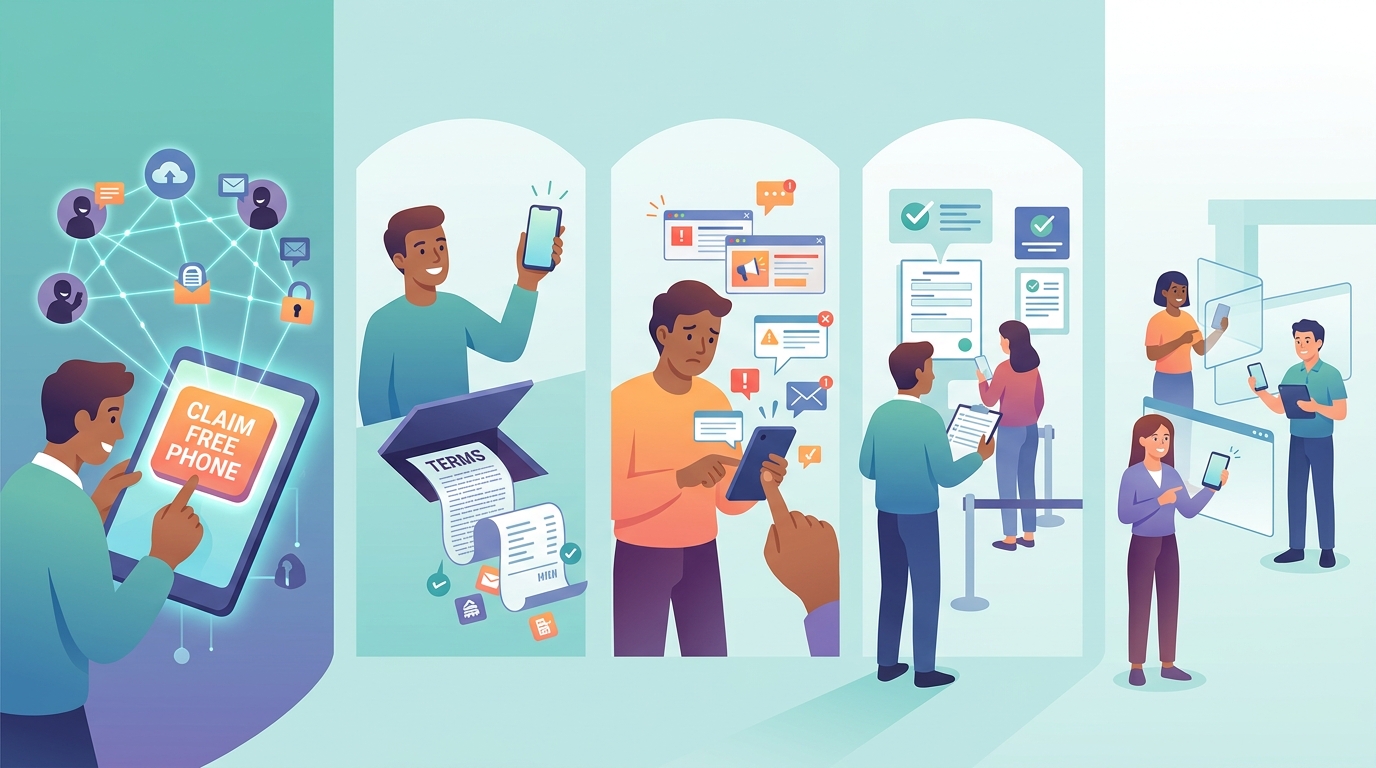
Many Facebook posts advertise complimentary high-end smartphones or zero-cost federal assistance devices to mobile users across the country. However, tapping these social media links without checking official rules often leads to stolen identities and unexpected bank charges.
The Hidden Price of Social Media Free Phone Offers
Promotions on social platforms frequently use images of brand-new flagship smartphones to attract clicks from consumers seeking lower monthly bills. While genuine federal assistance programs do exist to provide low-cost or free communications service to eligible low-income households, unauthorized third-party pages on Facebook often mimic these legitimate programs. Tapping an unverified advertisement can redirect users to external questionnaires designed to collect personal data rather than process genuine benefit applications.
Understanding how legitimate benefit distribution works is the primary defense against online consumer traps. Official assistance networks evaluate eligibility through centralized database checks rather than casual social media direct messages. Recognizing the key differences between real carrier promotions and fraudulent online traps prevents long-term financial harm. Below, we break down the four most common and costly mistakes users make when attempting to claim a phone through Facebook advertisements.
Mistake 1: Paying Upfront Delivery or Activation Fees
The most frequent trap involves advertisements demanding a small upfront payment for shipping, insurance, or processing. A post might claim that a premium $800 device is completely free, provided the user pays a nominal $4.99 or $9.95 delivery fee using a credit card or digital payment app. Once the user enters their payment details, the entity may set up recurring monthly charges or simply disappear with the card information.
According to federal guidance, government-backed phone programs or legitimate participating service providers do not require consumers to pay activation or shipping charges through unofficial peer-to-peer payment channels or gift cards (Source 1). The Federal Trade Commission notes that scammers frequently demand non-refundable payment methods, such as wire transfers, reload cards, or cryptocurrency, because these transactions cannot be reversed once completed (Source 1).
If a social media advertisement requires you to buy a gift card or send money via a peer-to-peer app to unlock a complimentary device, it is a clear indicator of a fraudulent scheme. Genuine benefit programs collect required documentation directly and verify your program participation without demanding arbitrary cash transfers.
Mistake 2: Sharing Social Security Numbers with Unverified Pages
To qualify for official government benefit programs like Lifeline, applicants must verify their identity and income level. Fraudulent Facebook pages exploit this requirement by inserting forms that request full Social Security numbers, dates of birth, and mother's maiden names directly inside pop-up browser windows.
The Consumer Financial Protection Bureau warns that handing over sensitive personal identification numbers to unverified entities puts consumers at severe risk of identity theft, unauthorized credit accounts, and account takeover (Source 2). While legitimate benefit portals do require identity verification, that data should only be entered into official government portals or verified participating service provider domains ending in authorized web extensions.
Before entering your Social Security number on any website reached through a social media link, inspect the full domain address in your mobile browser. If the web address does not match the known legal name of an official program administrator or established mobile carrier, close the browser immediately.
Mistake 3: Falling for Fake Verification Codes and Phishing Links
Another sophisticated tactic involves sending the user a text message containing a six-digit verification code during the sign-up process. The Facebook page or chat rep will ask the user to read back this code to 'verify identity' or 'confirm eligibility' for the free smartphone.
In reality, the operator is attempting to access the user's personal accounts, such as email, social media profiles, or banking applications. By triggering a two-factor authentication reset on your existing account, the operator uses the code you provide to bypass security measures and gain full control of your private profile (Source 1). The Federal Trade Commission emphasizes that consumers should never share security login codes or one-time passcodes with anyone who contacts them unexpectedly (Source 1).
Real communication providers will never ask you to text or message back a security code generated by a third-party application or service platform. Treat any request for temporary passcodes as a major security warning sign.
Mistake 4: Bypassing Official Benefit Portals for Third-Party Forms
Many consumers assume that tapping an ad on a major platform guarantees the legitimacy of the offer. However, advertising networks host millions of automated promotions daily, and rogue entities can slip through automated screening algorithms before being flagged and removed.
When seeking assistance with mobile phone costs, bypassing standard federal or state clearinghouses to use third-party lead generation forms often results in marketing spam, robocalls, and exposure to data brokers. The Consumer Financial Protection Bureau advises consumers to independently verify any financial or utility assistance program by searching for official agency channels rather than relying on sponsored links (Source 2).
To claim legitimate benefits, always navigate directly to official administrative portals—such as the Universal Service Administrative Company (USAC) National Verifier website—rather than following external links embedded in social media posts or direct messages.
Comparing Fake Facebook Claims to Official Programs
To help distinguish between authentic phone assistance channels and unauthorized social media traps, review the operational differences outlined in the table below.
| Feature / Requirement | Unauthorized Facebook Ad Claims | Official Government Assistance |
|---|---|---|
| Upfront Payment | Demands $5–$50 for shipping or processing | No mandatory upfront fees for basic service |
| Payment Method Requested | Gift cards, crypto, or peer payment apps | Standard banking or official provider bill pay |
| Identity Verification | Unsecured web forms or direct chat messages | Centralized National Verifier database system |
| Device Models Promised | Latest $1,000+ flagship smartphones | Basic entry-level smartphones or refurbished units |
| Application Portal | Random third-party domains or redirect links | Official .gov or verified provider domains |
How to Responsibly Claim Phone Assistance and Protect Your Data
If you are looking for legitimate mobile phone assistance based on income level or participation in public assistance programs like SNAP or Medicaid, you can apply directly through official regulatory channels. Start by visiting the official National Verifier database or contacting an established, licensed telecommunications provider operating in your state.
If you suspect you have already entered personal information into an unverified form on social media, act quickly to protect your identity. Change your passwords across primary email and financial accounts, enable multi-factor authentication using dedicated authenticator applications, and place a free credit freeze with the major credit bureaus per CFPB recommendations (Source 2). You can also report fraudulent posts and scams directly to the FTC at ReportFraud.ftc.gov (Source 1).
Are there real federal programs that offer free or discounted phones?
Yes. Federal programs such as Lifeline provide monthly service discounts and low-cost or free basic mobile devices to qualifying low-income households through participating telecom carriers.
Why do scammers ask for shipping fees on free devices?
Scammers use nominal shipping fees to collect your credit card details or extract untraceable payments via gift cards and peer-to-peer payment services (Source 1).
Where should I report a fake free phone offer on Facebook?
You should report the post directly to Facebook using their in-app reporting tools and file an official consumer report with the Federal Trade Commission at ReportFraud.ftc.gov (Source 1).
Sources
- How To Avoid a Scam — Federal Trade Commission
- Frauds and Scams — Consumer Financial Protection Bureau
This article is for general information only and is not professional advice. Figures come from public sources and change over time; check the official source before you act.
More from Daily Facts Wire
- Get Your Free Smartphone Through Federal Lifeline and Meta Promo Rules
- 4 Costly Mistakes People Make Claiming Free Phones On Facebook
- The $35 Hidden Activation Fee Inside Free Meta Phone Offers
- 7 Rules To Get A Free Government Smartphone Right Now
- International Medical Travel Insurance: Emergency Evacuation, Coverage Limits, and Claims
- Fiduciary Financial Advisor Fees: Fee-Only vs. Fee-Based Models and AUM Pricing