Medicare Advantage vs. Medigap: Comparing Coverage Differences, Out-of-Pocket Limits, and Costs
An objective, evidence-based analysis comparing Medicare Advantage and Medigap supplemental coverage, focusing on CMS out-of-pocket limits, network rules, and medical underwriting.
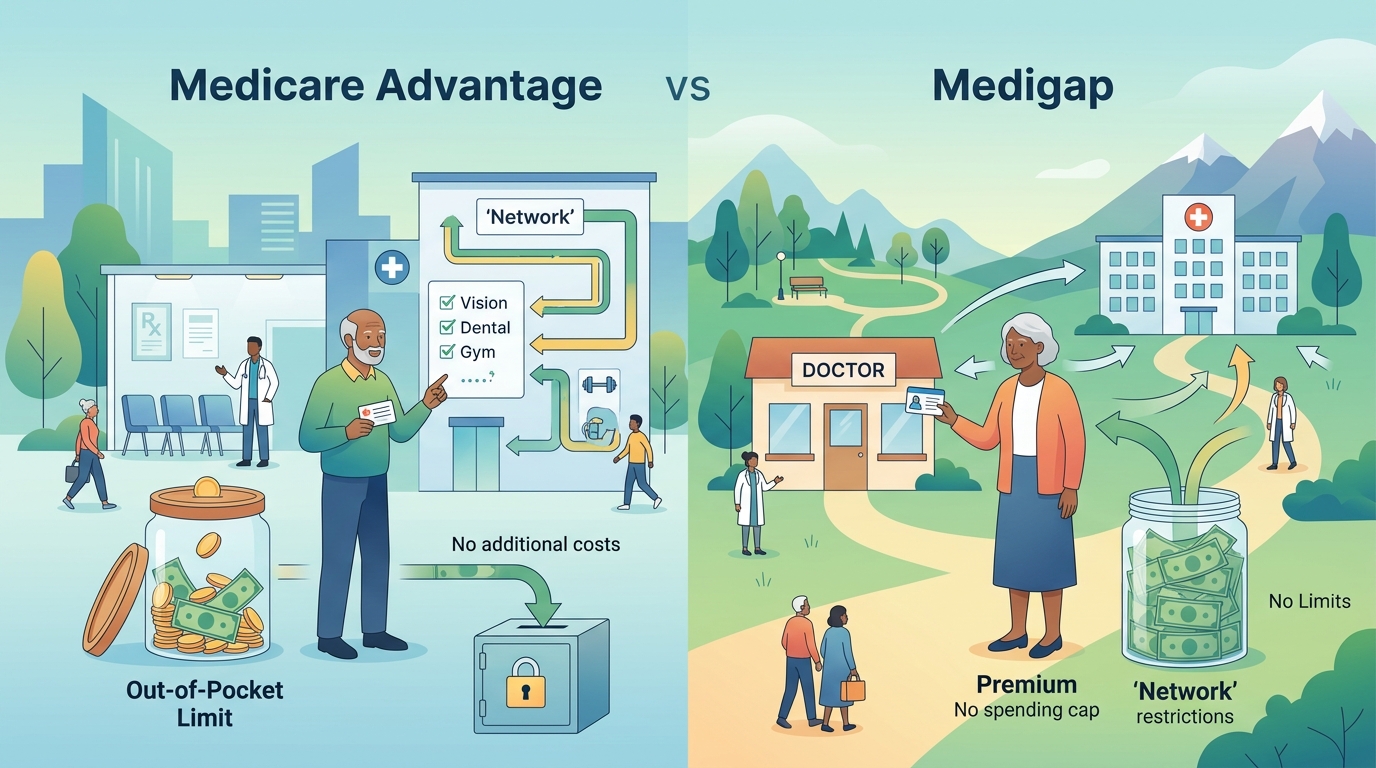
Understanding Your Medicare Options at Age 65
As seniors approach age 65 or re-evaluate coverage during the Annual Enrollment Period, choosing between Medicare Advantage and Medigap represents one of the most critical financial and healthcare decisions. Both pathways build upon Original Medicare (Part A and Part B), but they manage out-of-pocket costs, clinical care networks, and monthly premiums in fundamentally different ways (Source 1).
Original Medicare pays for many healthcare services and medical supplies, but it does not pay for everything. Beneficiaries remain responsible for deductibles, copayments, and coinsurance without a built-in cap on annual spending (Source 1). To address these potential financial gaps, beneficiaries must choose between enrolling in a Medicare Advantage plan (Part C) or purchasing a Medicare Supplement Insurance policy, commonly known as Medigap (Source 1). Evaluating medicare advantage vs medigap requires examining how each option structures total medical cost exposure, network access, and routine benefits.
Network Restrictions: HMO and PPO Advantage Plans vs. Medigap Freedom
A primary distinction between Medicare Advantage and Medigap is how each structures provider networks and geographic flexibility. Medicare Advantage plans are offered by private insurance companies approved by Medicare, operating mostly through Health Maintenance Organization (HMO) or Preferred Provider Organization (PPO) networks (Source 1).
Under an Advantage HMO plan, beneficiaries generally must receive care from doctors, specialists, and hospitals within the plan network, except in emergency situations (Source 1). HMO plans usually require primary care physician referrals to see specialists. Advantage PPO plans offer more flexibility, allowing members to see out-of-network providers, but beneficiaries incur significantly higher out-of-pocket coinsurance rates when doing so.
In contrast, Medigap policies work directly alongside Original Medicare. Medigap plans do not restrict beneficiaries to local provider networks (Source 1). A beneficiary with a Medigap policy can visit any doctor, specialist, or facility nationwide that accepts Medicare assignment (Source 1). Referrals are not required to see specialists, making Medigap a frequent choice for individuals who travel frequently across state lines or seek specialized care at major academic medical centers.
Out-of-Pocket Maximums: CMS Limits vs. Medigap Protection
Understanding financial risk requires analyzing the annual maximum out-of-pocket (MOOP) limits set by regulatory frameworks. Original Medicare alone has no annual cap on out-of-pocket medical expenses, leaving beneficiaries exposed to unlimited 20 percent coinsurance under Part B.
To protect consumers, the Centers for Medicare & Medicaid Services (CMS) mandates that all Medicare Advantage plans establish an annual in-network medicare part c out of pocket max (Source 1). Once a beneficiary reaches this catastrophic cap through deductible spending, copayments, and coinsurance, the Medicare Advantage plan pays 100 percent of covered medical expenses for the rest of the calendar year (Source 1). CMS updates these regulatory ceiling figures annually across insurer fee schedules.
Medigap plans function differently because they do not utilize a single MOOP cap. Instead, standardized Medigap plans pay standard deductibles, copayments, and coinsurance amounts directly as expenses occur (Source 1). For example, popular standardized options such as Medigap Plan G cover all Part B coinsurance expenses once the small annual Part B deductible is met. As a result, out-of-pocket exposure under a comprehensive Medigap plan is predictable and minimal throughout the year.
Premium Cost Structures: $0 Advantage Plans vs. Monthly Medigap Rates
The monthly cash flow requirements for Medicare Advantage and Medigap vary substantially. Beneficiaries must pay their standard Medicare Part B monthly premium regardless of which option they choose (Source 1).
Medicare Advantage plans frequently market $0 monthly plan premiums. These plans offset costs by using managed care networks, prior authorization requirements, and cost-sharing copayments collected when services are delivered. While the baseline premium may be zero, beneficiaries pay copays for physician visits, hospital stays, outpatient procedures, and diagnostic testing until reaching the plan maximum out-of-pocket threshold.
Medigap policies require a distinct monthly premium paid directly to the private insurer, in addition to the Part B premium (Source 1). Monthly medigap plan g premiums and general medicare supplement insurance costs vary depending on location, age, tobacco use, and gender according to insurer pricing tables. In exchange for higher fixed monthly premiums, beneficiaries experience lower variable costs at the point of care.
| Provider Networks | HMO/PPO networks; out-of-network care restricted or costlier | Any provider nationwide accepting Original Medicare |
|---|---|---|
| Referrals Required | Usually required in HMOs; generally not in PPOs | No referrals required for specialists |
| Out-of-Pocket Maximum | CMS sets annual cap for in-network medical spending | No single cap; plan pays standardized cost sharing directly |
| Monthly Premium | Often $0 beyond standard Part B premium | Separate monthly premium required based on plan type |
| Point-of-Care Copays | Pay-as-you-go copayments and coinsurance | Minimal to zero copayments after plan deductibles |
| Prescription Drug Coverage | Usually integrated into plan (MAPD) | Requires separate standalone Part D prescription plan |
Medical Underwriting and Guaranteed Issue Rights
Timing plays a crucial role when enrolling in Medicare Supplement Insurance. Federal rules grant beneficiaries a six-month Medigap Open Enrollment Period that begins automatically the month an individual turns 65 and is enrolled in Part B (Source 1).
During this initial six-month window, individuals have guaranteed issue rights (Source 1). Insurance companies cannot deny Medigap coverage, charge higher premiums based on pre-existing health conditions, or impose waiting periods for medical conditions (Source 1).
If a beneficiary misses this initial window and attempts to purchase a Medigap plan later, insurers in most states can subject the applicant to medical underwriting (Source 1). During underwriting, insurers review medical history, prescription drug records, and existing health conditions. Insurers may charge higher premiums or deny coverage entirely based on risk guidelines.
Conversely, Medicare Advantage plans do not subject applicants to medical underwriting during initial enrollment or the annual Open Enrollment Period. Beneficiaries can join or switch Medicare Advantage plans regardless of pre-existing conditions, provided they reside in the plan service area (Source 1).
Prescription Drug Coverage and Supplemental Perks
Prescription drug coverage (Medicare Part D) is integrated differently between the two plan types. Most Medicare Advantage plans include integrated Medicare Advantage Prescription Drug (MAPD) coverage within a single policy (Source 1).
Medigap policies sold to new beneficiaries cannot include prescription drug coverage (Source 1). Beneficiaries who select Medigap must purchase a standalone Part D prescription drug plan if they want coverage for outpatient medications (Source 1). Combining Medigap with standalone Part D requires managing two separate private plan premiums.
To attract consumers, many Medicare Advantage plans offer additional non-Medicare benefits. These extra perks frequently include allowance routines for routine dental cleanings, vision exams, hearing aids, or fitness memberships. Medigap plans do not cover routine dental, vision, or hearing services, focusing exclusively on paying Medicare-covered medical deductibles and coinsurance (Source 1).
Can I switch from Medicare Advantage to Medigap at any time?
You can drop a Medicare Advantage plan during designated enrollment periods, but switching to Medigap may require passing medical underwriting unless you qualify for specific guaranteed issue rights under CMS rules (Source 1).
Does Medigap cover prescription drugs?
No, modern Medigap plans sold to new beneficiaries do not cover prescription drugs. You must purchase a standalone Medicare Part D plan for outpatient medication coverage (Source 1).
What happens if my doctor leaves a Medicare Advantage network?
If your doctor leaves your Medicare Advantage network, you must choose another network provider or pay higher out-of-network costs, unless you switch plans during an eligible enrollment period (Source 1).
Sources
- Medicare Supplemental Insurance (Medigap) Overview — Centers for Medicare & Medicaid Services
This article is for general information only and is not professional advice. Figures come from public sources and change over time; check the official source before you act.
More from Daily Facts Wire
- 5 Lifeline Phone Application Mistakes That Stop Your Monthly Benefits
- 7 Income Rules That Qualify You for a Free Smartphone Today
- The 4.5GB Smartphone Data Secret Millions Miss Each Month
- Get Your Free Smartphone Through Federal Lifeline and Meta Promo Rules
- 4 Costly Mistakes People Make Claiming Free Phones On Facebook
- The $35 Hidden Activation Fee Inside Free Meta Phone Offers